It's all about ...
plants


Pink Lady Creeping Inchplant
Callisia repens 'Pink Lady'

Plant Height: 6 inches
Flower Height: 8 inches
Spread: 24 inches
Sunlight:


Hardiness Zone: (annual)
Other Names: Inch Plant, Turtle Vine
Description:
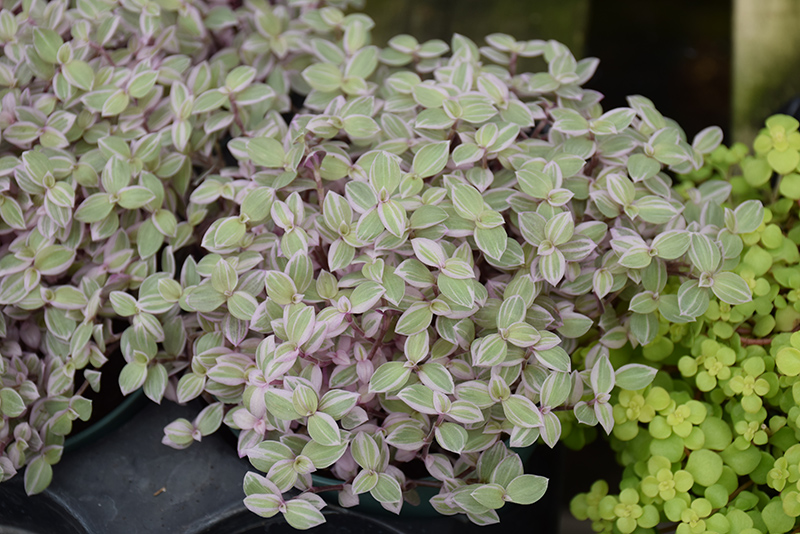
This selection is an excellent plant for borders, rock gardens, and massed as groundcover; foliage is attractively variegated with pink and cream; dainty white flowers accented with bright yellow stamens in late spring or early summer
Ornamental Features
Pink Lady Creeping Inchplant features dainty clusters of white flowers at the ends of the stems from late spring to early summer. Its attractive small glossy oval leaves remain green in colour with showy pink variegation and tinges of creamy white throughout the season. The deep purple stems can be quite attractive.
Landscape Attributes
Pink Lady Creeping Inchplant is an herbaceous annual with an upright spreading habit of growth. Its relatively fine texture sets it apart from other garden plants with less refined foliage.
This is a relatively low maintenance plant, and is best cleaned up in early spring before it resumes active growth for the season. It is a good choice for attracting butterflies to your yard, but is not particularly attractive to deer who tend to leave it alone in favor of tastier treats. It has no significant negative characteristics.
Pink Lady Creeping Inchplant is recommended for the following landscape applications;
- Mass Planting
- Rock/Alpine Gardens
- Border Edging
- General Garden Use
- Naturalizing And Woodland Gardens
- Container Planting
- Hanging Baskets
Planting & Growing
Pink Lady Creeping Inchplant will grow to be only 6 inches tall at maturity extending to 8 inches tall with the flowers, with a spread of 24 inches. Its foliage tends to remain low and dense right to the ground. Although it's not a true annual, this fast-growing plant can be expected to behave as an annual in our climate if left outdoors over the winter, usually needing replacement the following year. As such, gardeners should take into consideration that it will perform differently than it would in its native habitat. As this plant tends to go dormant in summer, it is best interplanted with late-season bloomers to hide the dying foliage.
This plant does best in partial shade to shade. It prefers to grow in average to moist conditions, and shouldn't be allowed to dry out. This plant should not require much in the way of fertilizing once established, although it may appreciate a shot of general-purpose fertilizer from time to time early in the growing season. It is not particular as to soil type or pH. It is highly tolerant of urban pollution and will even thrive in inner city environments. Consider covering it with a thick layer of mulch in winter to protect it in exposed locations or colder microclimates. This is a selected variety of a species not originally from North America. It can be propagated by division; however, as a cultivated variety, be aware that it may be subject to certain restrictions or prohibitions on propagation.
Pink Lady Creeping Inchplant is a fine choice for the garden, but it is also a good selection for planting in outdoor containers and hanging baskets. It is often used as a 'filler' in the 'spiller-thriller-filler' container combination, providing a mass of flowers and foliage against which the larger thriller plants stand out. Note that when growing plants in outdoor containers and baskets, they may require more frequent waterings than they would in the yard or garden.