It's all about ...
plants


Rosedale Spoons Hosta
Hosta 'Rosedale Spoons'

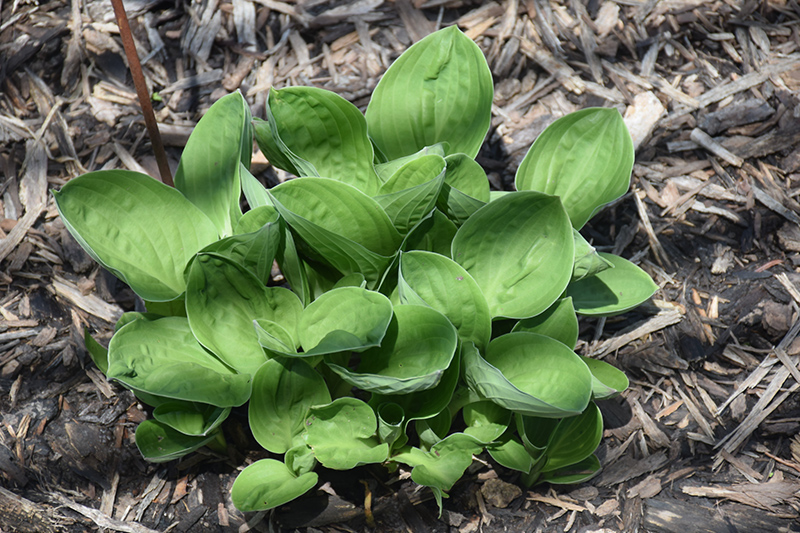
Plant Height: 13 inches
Flower Height: 18 inches
Spacing: 18 inches
Sunlight:


Hardiness Zone: 3a
Other Names: Plantain Lily, Funkia
Description:
A lovely eye-catching variety presenting deeply cupped blue-green foliage with near white flowers appearing during the summer months; a great way to add texture and contrast to garden beds, borders and containers; low maintenance and easy to grow
Ornamental Features
Rosedale Spoons Hosta features dainty spikes of white tubular flowers rising above the foliage in early summer. Its attractive textured heart-shaped leaves remain bluish-green in colour throughout the season.
Landscape Attributes
Rosedale Spoons Hosta is a dense herbaceous perennial with tall flower stalks held atop a low mound of foliage. Its medium texture blends into the garden, but can always be balanced by a couple of finer or coarser plants for an effective composition.
This is a relatively low maintenance plant, and is best cleaned up in early spring before it resumes active growth for the season. Gardeners should be aware of the following characteristic(s) that may warrant special consideration;
- Insects
Rosedale Spoons Hosta is recommended for the following landscape applications;
- Mass Planting
- General Garden Use
- Groundcover
Planting & Growing
Rosedale Spoons Hosta will grow to be about 13 inches tall at maturity extending to 18 inches tall with the flowers, with a spread of 20 inches. When grown in masses or used as a bedding plant, individual plants should be spaced approximately 18 inches apart. Its foliage tends to remain dense right to the ground, not requiring facer plants in front. It grows at a slow rate, and under ideal conditions can be expected to live for approximately 10 years. As an herbaceous perennial, this plant will usually die back to the crown each winter, and will regrow from the base each spring. Be careful not to disturb the crown in late winter when it may not be readily seen!
This plant does best in partial shade to shade. It prefers to grow in average to moist conditions, and shouldn't be allowed to dry out. This plant does not require much in the way of fertilizing once established. It is not particular as to soil type or pH. It is somewhat tolerant of urban pollution. This particular variety is an interspecific hybrid. It can be propagated by division; however, as a cultivated variety, be aware that it may be subject to certain restrictions or prohibitions on propagation.


