It's all about ...
plants


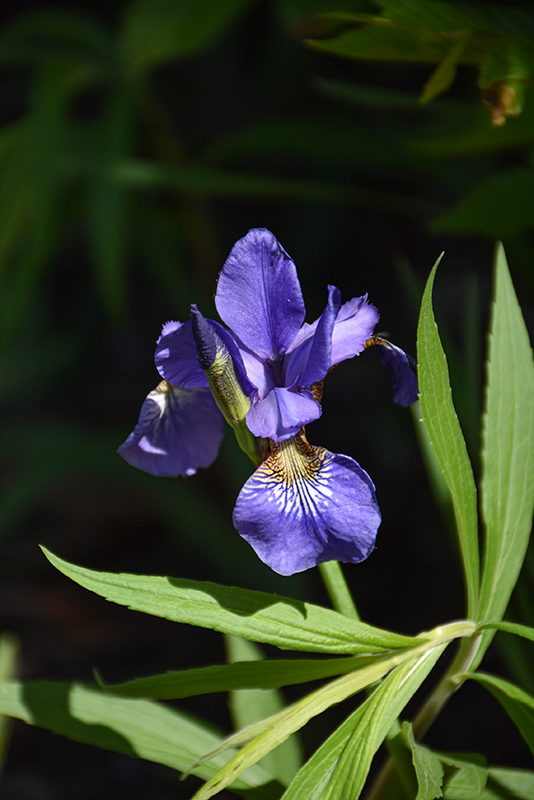
Blue Moon Siberian Iris
Iris sibirica 'Blue Moon'

Plant Height: 24 inches
Flower Height: 3 feet
Spacing: 18 inches
Sunlight:


Hardiness Zone: 2a
Description:
A lovely variety producing striking soft violet-blue inner petals with dark falls; massed plantings give the best effect in a garden, blooms from mid to late spring, best in full sun and moist soil but very adaptable
Ornamental Features
Blue Moon Siberian Iris has masses of beautiful violet flag-like flowers with blue overtones and indigo falls at the ends of the stems in mid spring, which are most effective when planted in groupings. The flowers are excellent for cutting. Its sword-like leaves remain green in colour throughout the season.
Landscape Attributes
Blue Moon Siberian Iris is an herbaceous perennial with tall flower stalks held atop a low mound of foliage. Its relatively fine texture sets it apart from other garden plants with less refined foliage.
This plant will require occasional maintenance and upkeep, and should be cut back in late fall in preparation for winter. Deer don't particularly care for this plant and will usually leave it alone in favor of tastier treats. It has no significant negative characteristics.
Blue Moon Siberian Iris is recommended for the following landscape applications;
- Mass Planting
- General Garden Use
Planting & Growing
Blue Moon Siberian Iris will grow to be about 24 inches tall at maturity extending to 3 feet tall with the flowers, with a spread of 20 inches. When grown in masses or used as a bedding plant, individual plants should be spaced approximately 18 inches apart. It grows at a medium rate, and under ideal conditions can be expected to live for approximately 10 years. As an herbaceous perennial, this plant will usually die back to the crown each winter, and will regrow from the base each spring. Be careful not to disturb the crown in late winter when it may not be readily seen!
This plant does best in full sun to partial shade. It is quite adaptable, prefering to grow in average to wet conditions, and will even tolerate some standing water. This plant does not require much in the way of fertilizing once established. It is not particular as to soil type or pH. It is somewhat tolerant of urban pollution. This is a selected variety of a species not originally from North America. It can be propagated by division; however, as a cultivated variety, be aware that it may be subject to certain restrictions or prohibitions on propagation.


