It's all about ...
plants


Bultinck Orange Beauty Yew
Taxus baccata 'Bultinck Orange Beauty'

Height: 8 feet
Spread: 12 inches
Sunlight:


Hardiness Zone: 6a
Other Names: English Yew, Common Yew
Description:
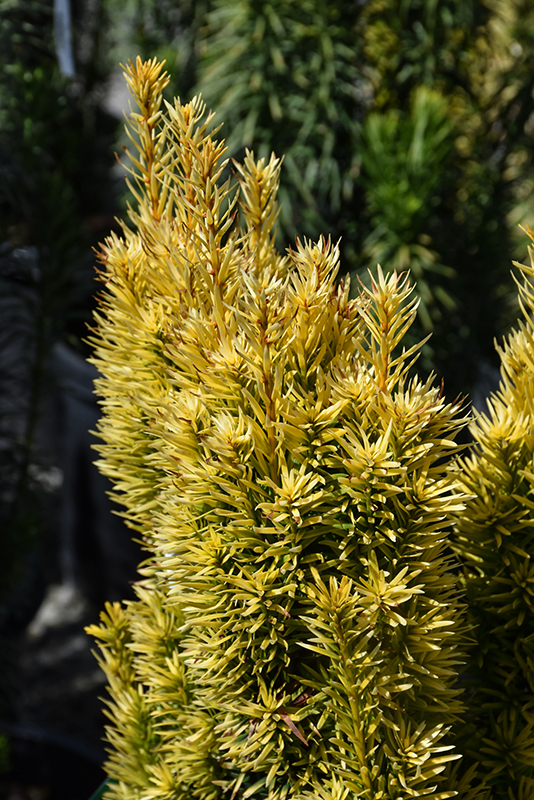
A very narrow, upright evergreen with almost vertical branching, bright yellow exposed foliage turns amber-orange in winter; makes a great color accent in a tight garden area; adaptable, and takes pruning exceptionally well
Ornamental Features
Bultinck Orange Beauty Yew is a dwarf conifer which is primarily valued in the landscape or garden for its rigidly columnar form. It has attractive yellow-variegated green foliage with hints of orange which emerges buttery yellow in spring. The small needles are highly ornamental and remain green throughout the winter.
Landscape Attributes
Bultinck Orange Beauty Yew is a dense multi-stemmed evergreen shrub with a narrowly upright and columnar growth habit. It lends an extremely fine and delicate texture to the landscape composition which can make it a great accent feature on this basis alone.
This is a relatively low maintenance shrub, and can be pruned at anytime. It has no significant negative characteristics.
Bultinck Orange Beauty Yew is recommended for the following landscape applications;
- Accent
- Vertical Accent
- Hedges/Screening
Planting & Growing
Bultinck Orange Beauty Yew will grow to be about 8 feet tall at maturity, with a spread of 12 inches. It has a low canopy with a typical clearance of 1 foot from the ground, and is suitable for planting under power lines. It grows at a slow rate, and under ideal conditions can be expected to live to a ripe old age of 150 years or more; think of this as a heritage shrub for future generations!
This shrub does best in full sun to partial shade. You may want to keep it away from hot, dry locations that receive direct afternoon sun or which get reflected sunlight, such as against the south side of a white wall. It does best in average to evenly moist conditions, but will not tolerate standing water. This plant should not require much in the way of fertilizing once established, although it may appreciate a shot of general-purpose fertilizer from time to time early in the growing season. It is not particular as to soil type or pH. It is highly tolerant of urban pollution and will even thrive in inner city environments, and will benefit from being planted in a relatively sheltered location. Consider applying a thick mulch around the root zone in winter to protect it in exposed locations or colder microclimates. This is a selected variety of a species not originally from North America, and parts of it are known to be toxic to humans and animals, so care should be exercised in planting it around children and pets.
This plant is not reliably hardy in our region, and certain restrictions may apply; contact the store for more information.


